Smile Makeover Treatment
Smile Makeover Treatment
Smile Makeover Tailored to Your Unique Features
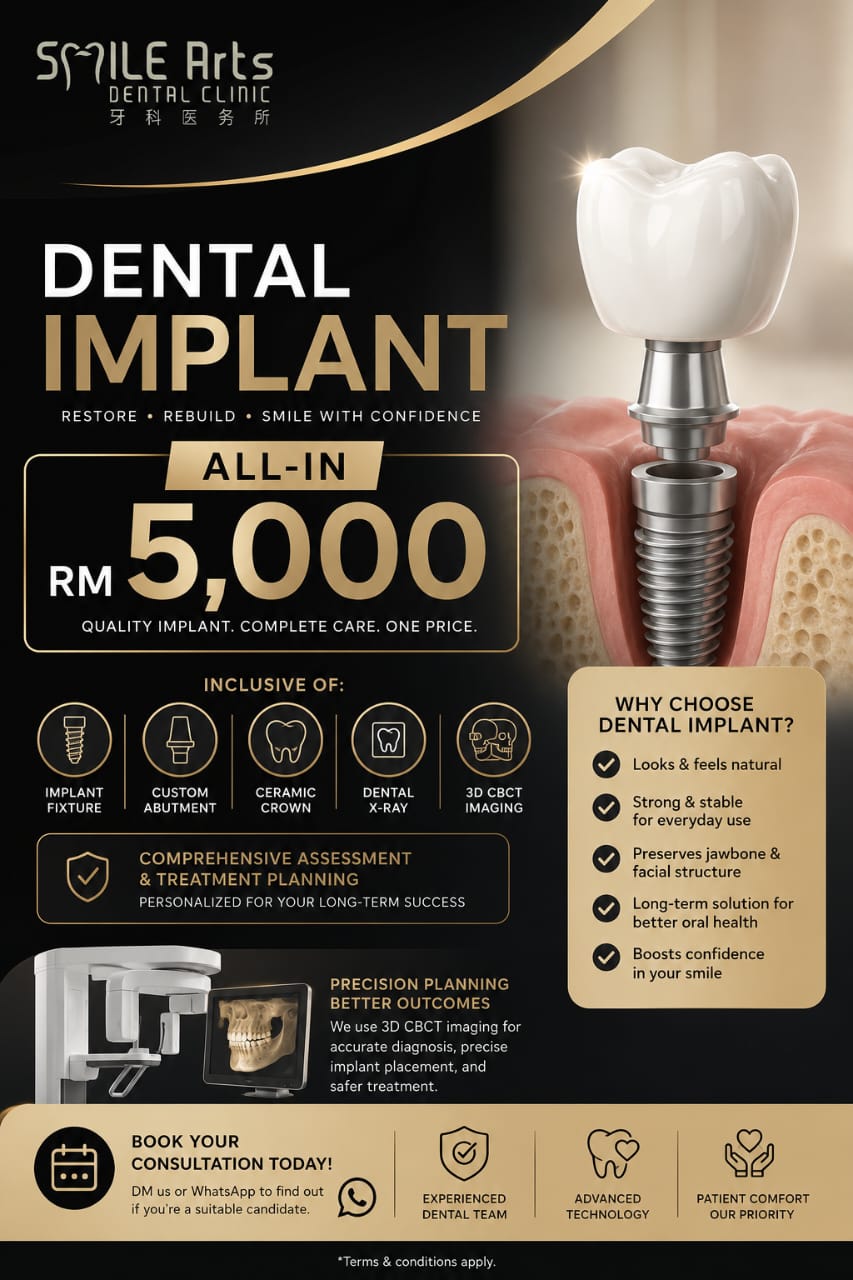
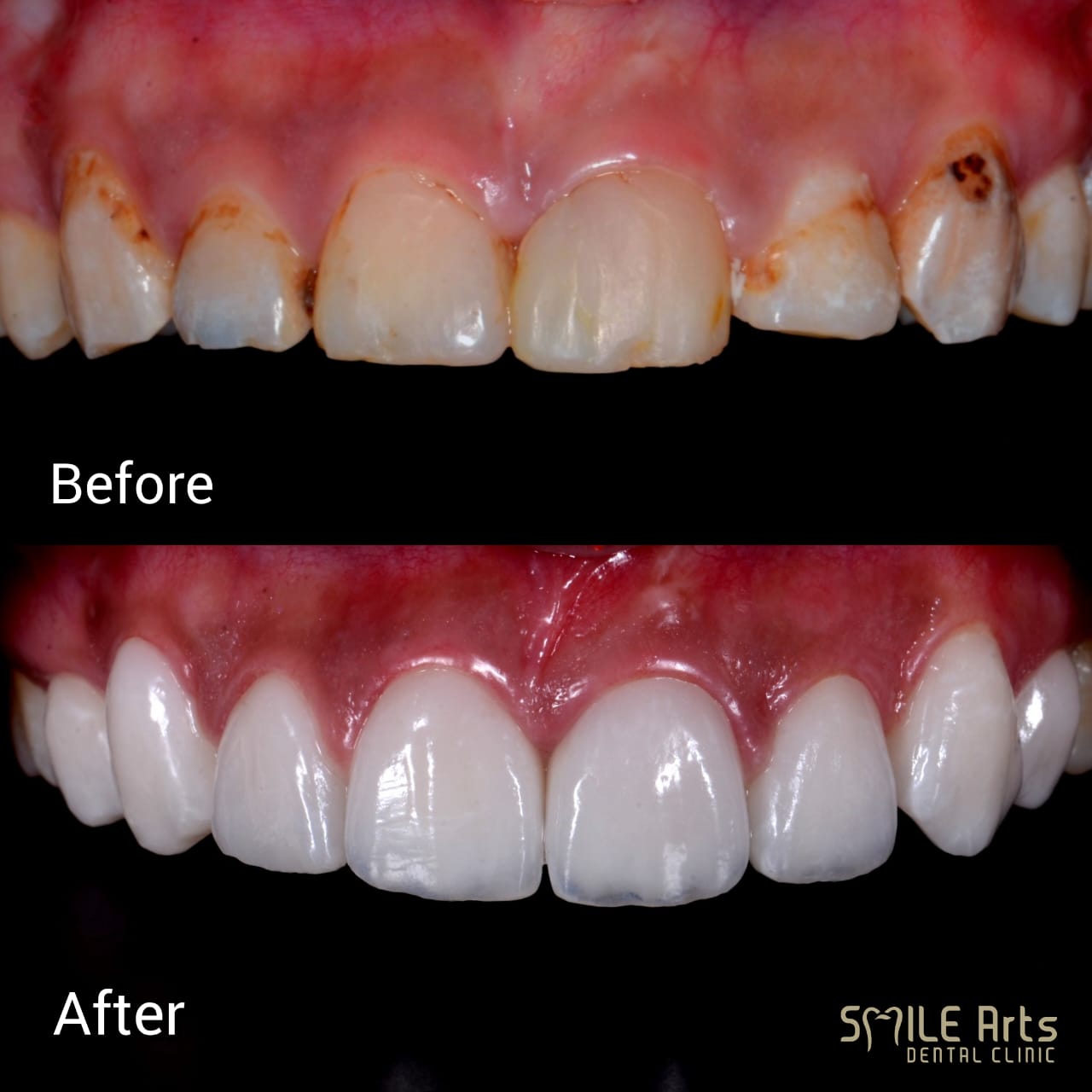
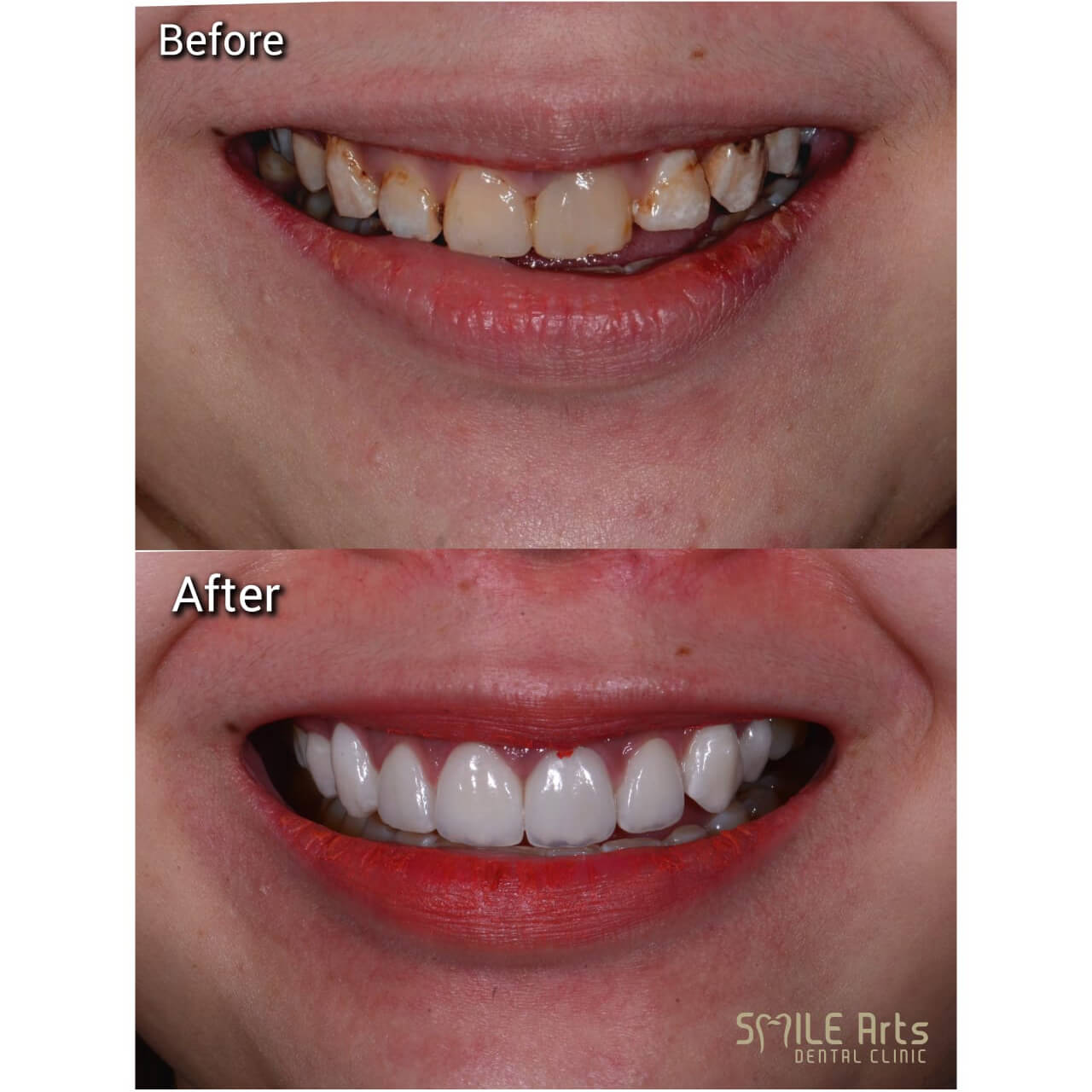
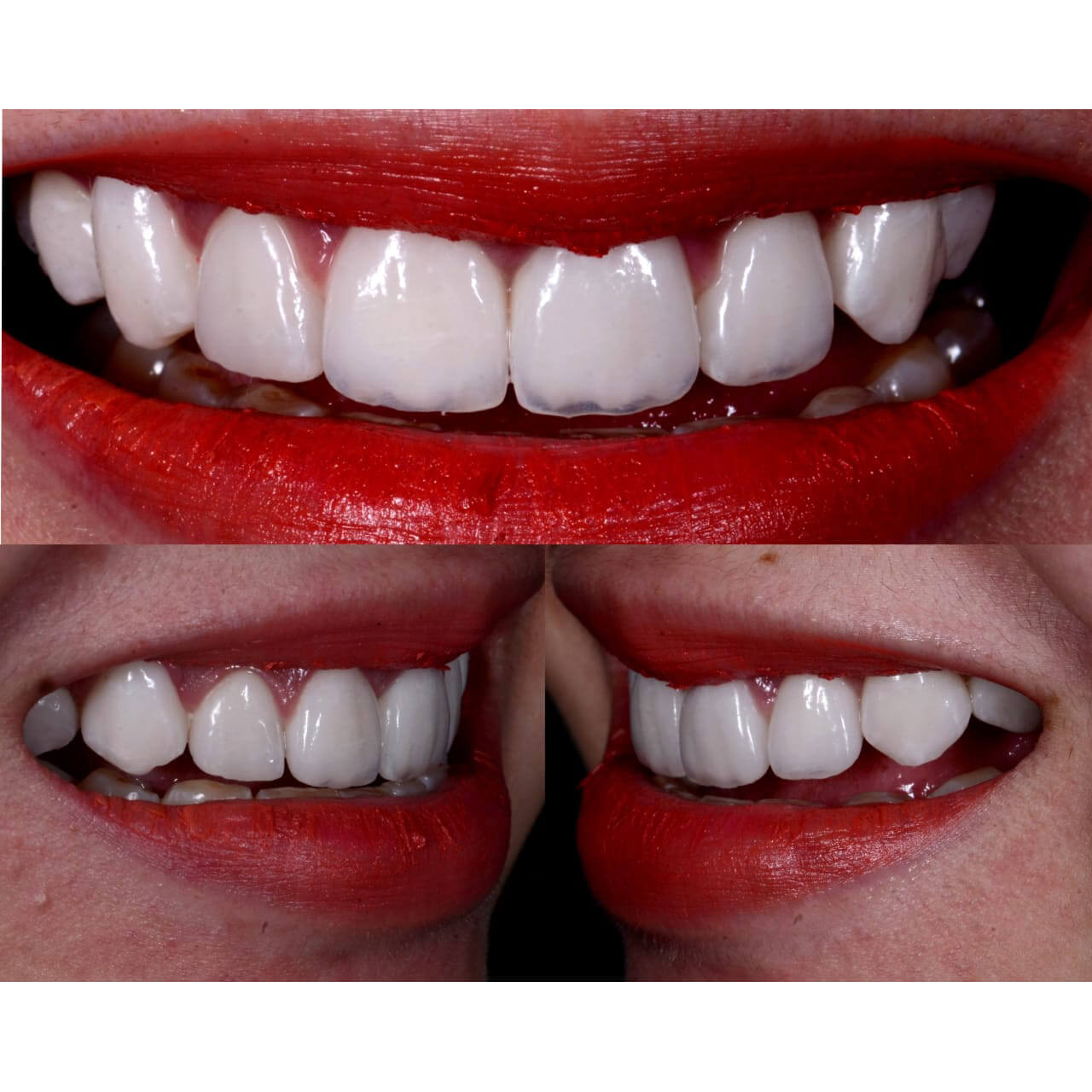
A smile makeover is the comprehensive treatment process of improving the appearance of the smile through one or more procedures, such as dental implant, crown & bridge, ceramic veneers, orthodontic treatment, teeth whitening, gum recontouring.
As every patient comes in with different dental problems such as missing teeth, malaligned teeth, discolored teeth, decayed teeth, etc. Every individual is unique and has varying facial features, jaw and teeth shape & proportion, soft tissue contour such as lip shape, length & thickness.
Therefore, there is no single treatment and smile design that suits every individual. A perfect smile for an individual needs to be customized and tailored to look harmonious with their facial features and appearance when transferred into their mouth. In order to achieve the best result and perfect smile, every individual may require different approaches and treatment procedures.
In modern dentistry, when combined with Digital Smile Design (DSD) we can design the perfect smile before the start of treatment using computer software and applications. This is done by collecting patient data such as pictures and videos of face & teeth, 3D image of teeth and jaw, radiograph of bone and soft tissue and analyzing them in software and applying aesthetic principles of face & teeth to create a virtual smile in visual form. This allows better communication between dentist and patient, dentist and specialist, laboratory ceramic technician. This “preview” of future smiles represent the treatment goal and vision, it can motivate patients to undergo the lengthy treatment process as they can see the end result before the start of treatment.
Some of the components taken into consideration include your facial appearance includes facial proportion, skin tone, teeth (color, width, length, shape and tooth display), gum tissue (gum display during smile and gum contour) and lips (thickness, length).
Frequently Asked Questions
Got Questions? We've got you.
What is it that you like or dislike about your smile or your teeth? Some aspects of your smile that your dentist will review with you and that could be improved include the following:
-
Tooth Color
Tooth color and shade are important considerations during the evaluation of and preparation for various procedures, including porcelain veneers, crowns, bridges, composite bonding and dental implants.
When considering the color of your teeth, keep in mind that dark or discolored teeth may suggest an aged mouth. A well-shaped smile comprised of bright, white teeth lends to a youthful appearance. The shade your dentist selects for teeth whitening and veneers is carefully evaluated with special consideration given to the tone and color of your face and hair. Cosmetic dentists are skilled at finding the right balance between providing you with a brighter, whiter smile and maintaining a natural tooth color.
-
Alignment and Spacing
Teeth that are crooked, overlapping or have gaps between them can be straightened and aligned with orthodontics or improved with ceramic/composite veneers.
-
Missing Teeth
One or more missing teeth can negatively affect the appearance of your smile – as well as affect your bite and cause migration of teeth to the empty space. Missing teeth can be replaced by dental implants, bridges or partial dentures.
-
Harmony and Proportion of Teeth and Gum
Uneven, chipped and cracked teeth can be cosmetically bonded for with composite or ceramic crown & veneers to improved appearance.
A gummy smile can be re-contoured to reduce the display of excessive gum during smile.
-
Fullness of Lips and Cheeks
An unshapely or aging face can be improved or rejuvenated with certain procedures in the smile makeover category, including orthodontics and/or oral maxillofacial surgery.
A cosmetic dentist will work closely with you to develop a treatment plan designed to achieve exactly what you want from your makeover. This treatment plan may consist of many cosmetic and functionally restorative procedures, potentially including teeth whitening, composite bonding, veneers, dental crowns, orthodontics, oral maxillofacial surgery.
-
Smile Curve
The smile line is an imaginary line that follows the edges of your upper teeth from side to side, which ideally should be the same as the curve of your lower lip when you smile. This is one of the most important aesthetic feature of smile. Restore your teeth to the length that will form this smile curve give you a charming and attractive smile.
-
Tooth Texture and Characterization
An artistic dentist can characterize your crowns or veneers to create a more feminine or a more masculine appearance, in addition to matching the look and feel of natural teeth.
How long does a smile makeover take and how much does it cost?
The duration of treatment and cost of your smile makeover will vary depending on your dentist, condition of your oral health and the extent of your customized makeover plan, types of procedures needed and complexity of the treatment plan.
How do I maintain my new smile after treatment?
Knowing how to maintain your oral hygiene habits to best care for your restorations will help you maintain your new smile for years to come.
Oral hygiene care such as brushing and flossing is a key factor in removing plaque from the teeth, and actually increases the lifespan of restorations and helps prevent tooth decay.
Highly abrasive toothpastes and vigorous tooth brushing habits can scratch the surface of restorations, dulling their polish and luster. As such, non-abrasive fluoride toothpastes are recommended. Flossing is important for everyone, but is especially important for people with veneers, crown & bridge or implant, since impeccable gum tissue health is important. While mouthiness is not mandatory, we do recommend to use mouthiness as adjunct to brushing and flossing to main good oral hygiene. Use alcohol-free mouthwashes instead of alcohol containing mouthrinse.
Cosmetic dentistry procedures may require maintenance over time. For example, teeth whitening need to be repeated on occasion in order to maintain brightness. Occasionally ceramic veneers may chip or break off and need replacement after 5-10 years. Permanent composite bonding may stain and require enhancement or replacement. Dental crowns typically require replacement after 10 to 15 years.
Most important, follow your dentist’s instructions to ensure the long-term beauty and health of your new smile, and be sure to keep all follow-up and regular cleaning appointments with your dentist.